Best Place to See Mt. Fuji: A 1-Day Viewpoint Itinerary
|
posted by WANGKIRA

Mount Fuji sits across two prefectures, with the best viewing spots scattered across a 50-kilometer radius. Relying on local buses to travel between them takes three to four hours of transit time alone. Putting the Fuji Five Lakes (Fujikawaguchiko) viewpoints into a single driving loop takes an eight-hour day. If you are starting from the capital, read our guide on [How to Get to Mt Fuji from Tokyo] before mapping your drive.
Weather and Timing
Fuji is fully visible about 80 days a year, usually between 6:00 AM and 10:00 AM. Clouds roll in by noon 70% of the time, even on days with clear forecasts. Visiting clustered spots in a single morning increases your chances of actually seeing the mountain. For historical cloud cover data by month, check [When is Mt. Fuji Visible?].
The 1-Day Mt. Fuji Viewpoint Route
The best places to see Mt. Fuji in a single day trip follow this order:
-
Oishi Park & Lake Kawaguchi for waterfront views.
-
Lawson Fujikawaguchiko for the modern street contrast.
-
Oshino Hakkai for traditional ponds fed by volcanic snowmelt.
-
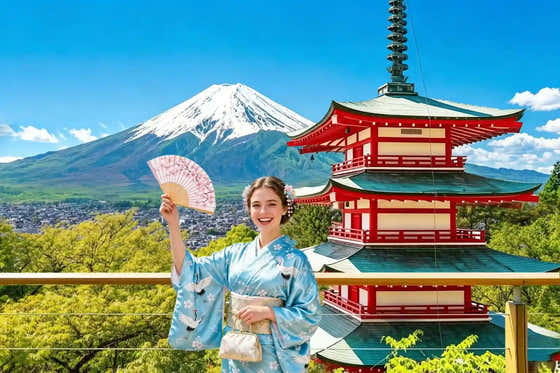
Arakurayama Sengen Park & Chureito Pagoda for the elevated postcard view.
-
Hikawa Clock Shop for retro street photography.
Getting between these spots via public transit means waiting 45 to 60 minutes for local buses. Read our [Best Mt Fuji Day Trip from Tokyo] breakdown for bus logistics. To run this exact sequence without dealing with rural transit schedules, a Mt Fuji guided tour departs Tokyo Station at 8:00 AM (and Shinjuku Station at 8:30 AM).
Oishi Park & Lake Kawaguchi

Oishi Park is one of the easiest places around Lake Kawaguchi to enjoy an unobstructed view of Mount Fuji. A paved lakeside promenade runs through seasonal flower displays, with lavender in early summer and bright red kochia in autumn. From the waterfront, Fuji is directly across the lake, and the mountain is usually well lit during the morning.
Lawson Fujikawaguchiko Town Hall

Across the road, the blue Lawson convenience store creates one of the area's best-known Mount Fuji photo compositions. Stay on the sidewalk and avoid stepping into the road, as police regularly monitor the area.
Oshino Hakkai

Oshino Hakkai is often the busiest stop on the route, especially from late morning onward. The village is built around eight spring-fed ponds formed by Mount Fuji's snowmelt, with water that remains crystal clear throughout the year. Small food stalls sell snacks such as sweet potato mochi and matcha, making it an easy place to take a break before continuing.
Arakurayama Sengen Park & Chureito Pagoda

Continue about 15 minutes north to Chureito Pagoda. The walk to the observation deck involves climbing 398 steps, but the view is one of the classic Mount Fuji photo spots. From the platform, the pagoda stands in the foreground with Fuji behind it. During the cherry blossom season, the platform can become extremely busy, and visitors may be asked to keep their stay brief. Entry is free.
Hikawa Clock Shop Street

The street is known for its perspective, where Mount Fuji appears at the end of the road behind the Showa-era shopfronts and the clock tower. A telephoto lens makes Fuji appear much closer to the buildings, but many visitors also get good results with a smartphone on clear days.
Where to See Mount Fuji With Fewer Crowds
If Lake Kawaguchi is too busy, continue to Lake Yamanaka or Lake Saiko for a quieter view of Mount Fuji.
Lake Yamanaka

Lake Yamanaka is the highest of the Fuji Five Lakes, at 980 meters above sea level, and is usually a few degrees cooler than Lake Kawaguchi. The northern shore at Nagaike Shinsui Park is one of the best places to watch Diamond Fuji, when the setting sun aligns with the summit between mid-October and February. The open lakeshore offers an unobstructed view of the mountain, with few buildings or power lines in the foreground. If you'd rather not drive, our Mt. Fuji day tour also includes a stop at Lake Yamanaka.
Saiko Iyashi-no-Sato Nenba

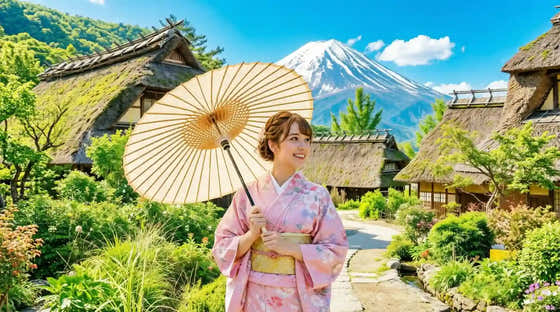
About 25 minutes west of Kawaguchiko Station, Saiko Iyashi-no-Sato Nenba offers a quieter alternative to Oshino Hakkai. The reconstructed village features traditional thatched-roof houses set against Mount Fuji, with far fewer tour groups than the more popular lakeside stops. Entry is ¥500. Because the village is spread across a gentle hillside, it's often easier to find open viewpoints and photograph Fuji without large crowds in the frame. Check out the full itinerary of our Mt Fuji day tour with Saiko Iyashi-no-Sato Nenba.
Setting Your Own Schedule
If you carry heavy camera gear, need a tripod, or plan to shoot at 5:00 AM, standard tour buses don't work. A 10-hour Mt Fuji private tour in an Alphard van is your best option. You simply tell the driver to change locations immediately if live webcams show clouds over Kawaguchiko but clear skies over Yamanaka or Saiko.
Hakone vs. Fuji Five Lakes

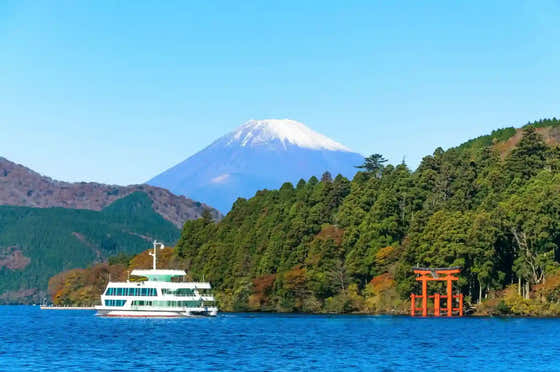
Go to Fuji Five Lakes (Kawaguchiko) for clear, base-to-peak views from 15km away. Go to Hakone for hot springs and museums, where you get a distant, partial view of the mountain from 45km away. Read the exact breakdown in [Hakone vs Kawaguchiko: Which is Better for You?] and check sightlines in [Can You See Mt Fuji from Hakone?].
See also: Hakone Fall Foliage 2026
Practical Viewing Tips
-
Visibility: Check the "Fujigoko TV" live YouTube webcams at 6:00 AM before leaving Tokyo.
-
Temperature: The lakes sit at 800m elevation. It stays 5-8°C colder than Tokyo. Bring a windbreaker even in May.
-
Afternoon Plans: When the afternoon clouds roll in, visit the local ropeways, caves, and museums listed in [12 Best Things to Do in Mt Fuji].
Best Place to See Mt Fuji FAQs
What town can you see Mount Fuji from?
You can see Mount Fuji from Fujikawaguchiko and Hakone. Fujikawaguchiko offers direct 15km views of the mountain, while Hakone provides distant 45km views.
What is the famous street to see Fuji?
The two most famous streets for Mount Fuji photography are the road outside the Lawson Fujikawaguchiko Town Hall and the street featuring the retro Hikawa Clock Shop near Shimoyoshida Station.
Where can I see Mount Fuji less touristy?
Go to Lake Yamanaka or the reconstructed village of Saiko Iyashi-no-Sato. Lake Yamanaka provides unobstructed views along a quiet 2.5km shoreline, and Saiko Iyashi-no-Sato offers a traditional village aesthetic without the dense crowds of Oshino Hakkai.
Can you actually see Mount Fuji from Tokyo?
Yes, you can see Mount Fuji from Tokyo (100km away) on clear days during winter. Top viewing spots include the Tokyo Metropolitan Government Building, Shibuya Sky, and Tokyo Skytree.
Which month is Mount Fuji most visible?
Mount Fuji is most visible from November to February. December and January offer a 75% chance of a clear view.