Things to Do in Hakone
|
posted by WANGKIRA

Hakone is located about 90 minutes southwest of Tokyo and is one of the most accessible areas for hot springs, mountain scenery, and views of Mount Fuji.
Because Hakone is a steep, mountainous region, planning a trip here requires more than just hopping on a single subway line. The area relies on a patchwork of switchback trains, cable cars, and local buses. While navigating this yourself is possible, it requires strict schedule management. For travelers who want to focus on the sights rather than bus timetables, joining a guided day tour is often the most practical option.
If you are trying to decide if the area fits your schedule, read our breakdown on Is Hakone Worth Visiting. If you are ready to build an itinerary, here are the specific places you should prioritize and the logistical realities of getting to them.
Understanding "The Hakone Loop"
Most of the major sites in Hakone are connected by a circular sightseeing route known as the Hakone Loop. This route uses five different modes of transportation: the mountain railway, a cable car, a ropeway, a sightseeing boat across Lake Ashi, and local buses.
Traveling the loop sequentially is the most efficient way to limit travel time. If you do this on public transit, you must transfer between each mode of transport and match their varying departure schedules. You can read our detailed breakdown in our Hakone One Day Itinerary to see the exact timing required.
Top Things to Do in Hakone
If you are doing a day trip, stick to the stops along the main loop.
1. Ride the Hakone Tozan Railway to Gora
The trip begins at Hakone-Yumoto Station, where you transfer to the Hakone Tozan Railway. This train travels up the mountainside using a switchback system, reversing direction multiple times to climb the steep grade. The ride to Gora Station takes about 40 minutes. If you visit in June or July, hydrangeas bloom directly along the tracks.
2. Walk the Hakone Open-Air Museum

Get off one stop before Gora at Chokoku-no-Mori Station to visit this large outdoor art park. It contains over 100 sculptures set across a grassy area with mountain views in the background. There is also a dedicated indoor pavilion featuring original works by Pablo Picasso. Plan to spend about 90 minutes walking the grounds.
3. Ascend the Hakone Ropeway

From Gora, take the 10-minute Hakone Tozan Cable Car up to Sounzan Station. Here, you transfer to the Hakone Ropeway. As the gondola goes over the ridge, the ground drops into a steaming volcanic crater. On days with clear weather, this is where you get your first major view of Mount Fuji. For specifics on visibility, read our guide: Can You See Mt Fuji from Hakone?
Tip: The ropeway frequently closes without warning due to high levels of volcanic gas. If you are traveling on your own, you will have to quickly find alternative local bus routes to avoid getting stranded. This is one reason visitors book a Hakone Day Tour—if the ropeway closes, your driver reroutes the vehicle directly to the next stop.
4. Eat Black Eggs at Owakudani Volcanic Valley

When you exit the ropeway at Owakudani, you will notice a strong sulfur smell. This is an active volcanic valley known for kuro-tamago—chicken eggs hard-boiled in the natural hot spring pools. The sulfur and iron in the water turn the eggshells pitch black. According to local custom, eating one egg adds seven years to your life. They are sold in bags of four.
5. Cross Lake Ashi on a Pirate Ship

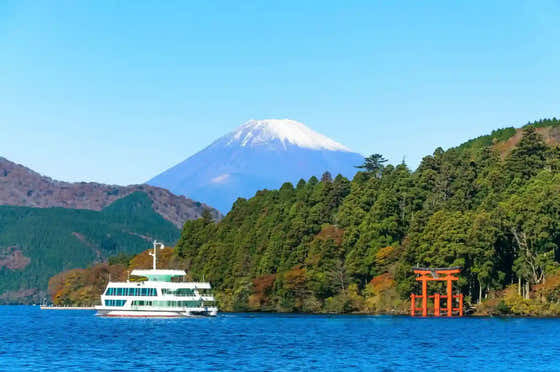
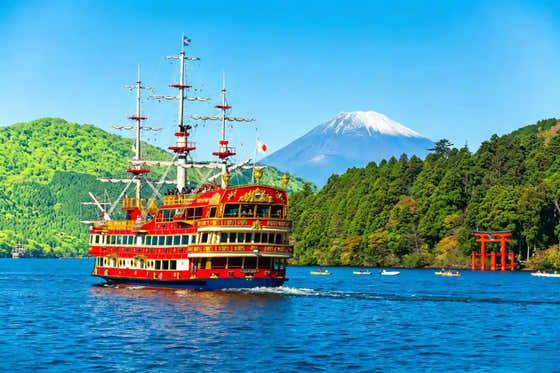
Take the ropeway down the other side of the mountain to Togendai Station, located on the shore of Lake Ashi. From here, you board a sightseeing boat designed to look like an 18th-century pirate ship. The boat takes about 30 minutes to cross the caldera lake to Moto-Hakone port.
6. Photograph the Torii Gate at Hakone Shrine

After getting off the boat at Moto-Hakone, it is a 10-minute walk along a forested path to Hakone Shrine. The shrine’s large red torii gate stands directly in the water of Lake Ashi.
Tip: Because this is a highly photographed spot, the line to take a picture under the gate routinely takes 45 minutes by midday. If this is a priority, arrive at the gate before 9:00 AM. See the itinerary of a fully customizable private tour with a driver and an English guide.
Art, Culture & History
If you have a second day or want to skip the main loop, these sites offer specific cultural history.
7. Walk Through the Hakone Checkpoint (Sekisho)

During the Edo period, the government heavily restricted travel. Hakone was a major checkpoint on the Tokaido Road connecting Kyoto and Tokyo. The checkpoint buildings and gates have been reconstructed to show the historical travel regulations and inspections.
8. Visit the Pola Museum of Art

Located inside a beech forest, this building houses a collection of Western impressionist art, including pieces by Monet, Renoir, and Van Gogh. The structure is built mostly underground to avoid disrupting the trees above it.
9. See Traditional Woodworking at Hatajuku (Yosegi-zaiku)

Hakone produces yosegi-zaiku, a type of traditional Japanese wooden mosaic marquetry. In the village of Hatajuku, you can watch craftsmen assemble different colors of wood into geometric patterns to make puzzle boxes and coasters.

Relaxation: Onsens & Ryokans
Hakone is one of Japan's major hot spring towns, drawing visitors specifically for the water.
10. Soak in a Traditional Hot Spring (Onsen)

If you just want a bath without staying overnight, there are several day-use facilities. Tenzan Tohji-kyo is an outdoor bath complex surrounded by trees.
Tip: Most traditional public onsens prohibit guests with tattoos. If you have tattoos, you must book a private bath (kashikiri) or confirm that the facility specifically allows them. Contact us to book a private tour, and we'll take care of the planning for you.
11. Stay Overnight in a Ryokan

Staying in a ryokan (traditional Japanese inn) typically includes a multi-course kaiseki dinner, breakfast, and access to the inn’s private hot springs. Keep in mind that the town of Hakone largely shuts down by 6:00 PM. Evening activities consist primarily of eating and using the baths at your accommodation.
12. Swim at Hakone Kowakien Yunessun

Yunessun is a hot spring theme park where swimsuits are required, making it a practical option for families with children. Alongside standard water pools, the facility features specific baths filled with real green tea, coffee, and red wine.
Important Hakone Travel Tips & Logistics
Is the Hakone Freepass Worth It?
If you are strictly on a budget and plan to spend two or three days in the area, yes. The pass costs ¥7,100 from Shinjuku and covers your round-trip train from Tokyo and most transit within Hakone.
However, if you are only visiting for a day trip, the pass comes with a significant hidden cost: your time.
Doing the Hakone Loop on public transit means you are tied to train and bus schedules. On weekends or during autumn foliage season, buses regularly fill to capacity, meaning you may have to wait for the second or third bus to board. If you miscalculate the timetable, you can easily get stranded after 5:00 PM when transit operations wind down.
If you are comfortable navigating foreign transit systems and waiting in lines, the Free Pass works. But if you want to maximize your limited time in Japan, skip the transit puzzle. Booking a Private Hakone Tour (customizable) means a private vehicle takes you directly to the sites. You avoid crowded buses, eliminate missed connections, and can fit more attractions into a single day.
Hakone vs. Kawaguchiko (Fuji Five Lakes)

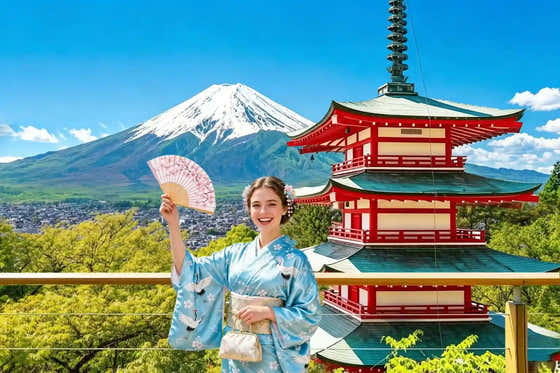
Many travelers confuse these two areas. Chureito Pagoda and Oshino Hakkai are not in Hakone. They are located in the Fuji Five Lakes (Kawaguchiko) area, which is roughly 90 minutes north of Hakone by bus.
If your primary goal is to see Mount Fuji up close, Kawaguchiko is the better destination. If you want hot springs, art museums, and the mountain transport loop, choose Hakone. We outline the specifics in our Hakone vs Kawaguchiko guide to help you decide.
Looking to combine Hakone and Kawaguchiko in one trip? Our Hakone & Kawaguchiko Day Tour makes it easy to experience both in a single day.

What to Do on a Rainy Day in Hakone
The ropeway and pirate ship rely on clear weather, making the outdoor loop difficult during a downpour. On a rainy day, pivot to indoor locations. Spend your time at the Hakone Glass Museum, the Pola Museum of Art, or purchase a day pass to a covered onsen like Hakone Yuryo.
Best Hakone Day Tours

Trying to schedule trains, ropeways, boats, and hot springs into a single day while managing crowds is demanding. If you want to focus on the locations rather than the logistics, our guided tours handle the transportation.
-
For the Full Region: Hakone & Kawaguchiko Day Tour: Mt. Fuji Views, Lake Ashi Cruise & Oshino Hakkai from TokyoPublic transit makes it nearly impossible to see both Hakone and the Fuji Five Lakes in one day. This tour solves this by driving you efficiently between both areas.
-
For Custom Pacing: Private Hakone Tour If you do not want a set group schedule, check this tour. You will receive a private vehicle and driver. We will pick you up at your hotel and the itinerary is fully customizable, allowing you to control how long you stay at each location.
Things to do in Hakone FAQs
Is 1 day enough for Hakone?
Yes, one full day provides enough time to complete the classic Hakone Loop, including the ropeway, Owakudani, and Lake Ashi. However, you will need to adhere to a strict schedule. Staying overnight in a ryokan removes the time pressure and allows for museum visits and a proper onsen experience.
Can you see Mt. Fuji from Hakone?
Yes, Mount Fuji is visible from specific locations in Hakone, primarily from the Lake Ashi sightseeing boat and the Hakone Ropeway. Mt Fuji's visibility depends entirely on the weather and is highest on clear, cold mornings between November and February.
What are the best things to do in Hakone with kids?
Families frequent the Hakone Open-Air Museum for its physical climbing structures, take the Lake Ashi Pirate Ship, and visit the Yunessun hot spring theme park, which requires swimsuits and features unconventional pools like the coffee bath.
What is there to do in Hakone at night?
Hakone operates on a rural schedule. Most shops and restaurants close between 5:30 PM and 6:00 PM. Nighttime activities consist of eating dinner at your accommodation, using the onsen, and resting.