Arashiyama Bamboo Grove | How Long to Spend
|
posted by WANGKIRA
Most people come to Arashiyama for the bamboo grove and leave wishing they'd planned more time for the rest of the area. For the bamboo forest itself, 15–30 minutes is usually enough to walk the path, take photos, and enjoy the atmosphere. The grove itself is a 500-metre public path — free, always open, and impressive. The moso bamboo grows 20 metres tall and so densely packed that the canopy blocks out most of the sky. The Japanese Ministry of the Environment actually designated the sound of wind moving through it as one of Japan's "100 Soundscapes." It's that kind of place.

But the grove is really just the entry point. The surrounding district — temple gardens, a hilltop villa, a riverside bridge, small shrine paths — is some of the best walking in Kyoto. This guide covers the full picture: what's worth seeing, how to get there, and how to put together a good day in the area.
The Best Time to Visit Arashiyama Bamboo Forest
Seasons and What to Expect

The Cherry Blossom Season (late March to mid-April) is one of the best times to visit. The grove itself doesn't change much, but the approach along the Oi River and the grounds of Tenryu-ji are transformed. It's busy — deservedly so.

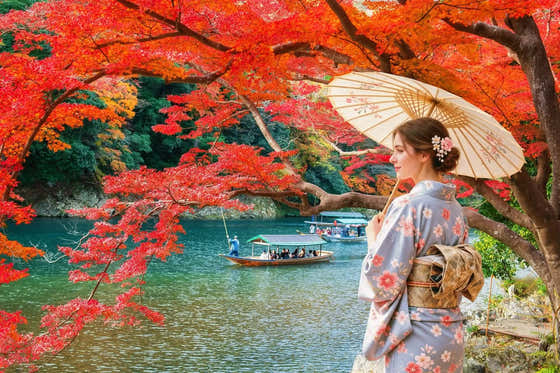
Autumn Foliage (mid-November to early December) is arguably even better. The hillsides above Arashiyama turn deep orange and red, and the contrast with the evergreen bamboo is striking. This is peak Kyoto season across the board.

Summer brings lush, intensely green bamboo and occasional morning mist off the river. Humidity is real, so dress accordingly and carry water. Weekdays are easier than weekends.

Winter (January–February) is the quietest time. On the rare day it snows, the grove looks completely different — worth it if the timing works out.
Time of Day
The grove is open 24 hours, and there's no entrance fee, so you have flexibility. Morning visits — roughly between opening hours of adjacent temples and early afternoon — tend to offer the nicest light for photography, with soft diffused illumination filtering through the canopy. The midday light is brighter and more direct, giving a vivid, high-contrast look that many visitors actually prefer for photos.
Late afternoon in summer, when the slanted light turns golden, produces particularly warm, atmospheric shots for photography enthusiasts.
Check out this day tour to visit Nara, Arashiyama and Fushimi Inari Taisha.

¥639.00
¥355.00
How to Get to Arashiyama Bamboo Grove
Arriving by Train
Arashiyama is well-connected by rail from central Kyoto. The most direct route from Kyoto Station is the JR Sagano Line to Saga-Arashiyama Station (about 15–17 minutes, roughly ¥240). From the station, it's a 10-minute walk to the bamboo grove entrance.
Alternatively, the Keifuku Railway (Randen) runs from Shijo-Omiya in central Kyoto to Arashiyama Station (about 20 minutes). It's a charming old tram line worth taking in its own right. The Hankyu Line via Katsura is a further option for those coming from Osaka's Umeda area.
IC cards (Suica, ICOCA) work across all these lines, and the JR leg is included in the JR Pass.
Book a private car and a professional guide.

¥4,087.00
¥3,338.00
Arashiyama Itinerary: What to Pair with the Grove
The bamboo path itself takes 15–20 minutes to walk through. The magic of Arashiyama is what surrounds it — allow at least 2–3 hours for the full area.
Tenryu-ji Temple & The Zen Garden

Directly adjacent to the grove's southern entrance, Tenryu-ji is one of Kyoto's most important Zen temples and a UNESCO World Heritage Site. Its stroll garden — designed in the 14th century by the monk Muso Soseki — centres on a large reflective pond framed by sculpted pines and the Arashiyama hills used as borrowed scenery (shakkei). It's one of the most accomplished examples of classical Japanese garden design in existence.
Garden admission is ¥500; access to the temple buildings is an additional ¥300. It's worth it.
Nonomiya Shrine

A small Shinto shrine tucked into the forest at the bamboo grove entrance, closely associated with The Tale of Genji. It takes only five minutes to visit, but the mossy stone torii gate and the quiet forested setting add real depth to the walk.
Togetsukyo Bridge & the Oi River

The arched bridge at the centre of the Arashiyama district — the name means "Moon Crossing Bridge" — is worth crossing on foot. The riverbank on either side is a good place to decompress after the grove. In Kyoto autumn foliage, the surrounding hills turn orange and red above the water, which is when most of the best photos of this spot get taken.
Arashiyama Day Trips
Arashiyama sits in Kyoto's western outskirts, which makes combining it with sights in the north or east of the city a genuine transit exercise. Kinkaku-ji, Fushimi Inari, and Nara are all popular pairings, but reaching them from Arashiyama independently — particularly mid-day — involves navigating Kyoto's congested bus network or switching between multiple rail lines with separate ticketing.
Our guided day tours handle this entirely. We take care of routing, timing, and all transport between stops, so the day moves smoothly without the overhead of logistics planning. Our tours run 8–10 hours from a central meeting point.

A local guide is with you throughout, which makes a real difference in a place like Arashiyama where the context — the history of Tenryu-ji, why Nonomiya Shrine matters, what you're actually looking at from the Okochi-Sanso terrace — isn't obvious from a sign.
Tips for Your Visit
Route: Enter from the North
The bamboo path runs roughly north–south. Most visitors enter from the southern end near Tenryu-ji, meaning the northern section stays comparatively quieter throughout the day. If you can work your way to the northern entrance first — accessible from the small lanes behind Okochi-Sanso — you'll experience the grove in a more relaxed atmosphere before moving toward the more active southern end.
Photography Tips

The grove rewards patience. A wide-angle lens captures the scale and tunnel-like perspective of the path; a longer focal length compresses the stalks into a dense, layered wall of green. The light through the canopy varies significantly by time of day — morning gives soft, diffused greens while midday produces more vivid contrast. Both work; it depends on the look you're after.
The small side lanes running east of the main path toward Jojakko-ji and Nison-in temples have quieter bamboo scenery with far fewer people — worth exploring if you have extra time.
What to Wear

The main grove path is paved and flat — no specialist footwear needed. If you plan to continue up to Okochi-Sanso, there are stone steps and uneven terrain, so comfortable walking shoes are a sensible choice. Kimono rental is popular in the area and several shops operate near the stations; if you go this route, zori sandals (flat, offered by most rental shops) are more practical for a full day of walking than traditional wooden geta.
Arashiyama Bamboo Grove FAQs
How long does it take to walk through the bamboo grove?
The main path takes about 15–20 minutes at a relaxed pace. For the full Arashiyama area including Tenryu-ji and the riverbank, allow 2–3 hours.
What is the best way to get the most out of a visit?
Don't rush through it. The path is short, but the grove is worth stopping in, not just walking through. The soundscape — bamboo moving in the wind — is the thing most people mention afterward.
Is the bamboo forest worth visiting?
Yes. It's one of the few Kyoto sights that consistently meets expectations — the scale surprises people, and the surrounding area gives you plenty to fill out the day. It's on our tours because guests reliably rate it as a highlight.