Hakone Fall Foliage 2026: Peak Dates, Spots & 1-Day Tour Route
|
posted by WANGKIRA
When & Where to See Hakone Fall Foliage in 2026
Hakone's fall foliage season generally runs from late October through early December, with higher-elevation areas changing first and lower areas around Hakone-Yumoto turning later.
| Elevation Level | Altitude Zone | Typical Foliage Timing | Primary Viewing Locations |
|---|---|---|---|
| High Elevation | 800m – 1,000m+ | Late October – mid-November | Owakudani, Hakone Ropeway, Togendai |
| Mid Elevation | 400m – 700m | Early – mid-November | Lake Ashi, Hakone Shrine, Moto-Hakone |
| Low Elevation | 100m – 300m | Mid-November – early December | Hakone-Yumoto, Tonosawa, Hayakawa River |
A day trip from Tokyo can cover several of these areas, but the best foliage timing will not be exactly the same everywhere. For a self-guided trip, see our Hakone One Day Itinerary. If you prefer to avoid multiple transit transfers, our Hakone & Mt Fuji Day Tour combines several major sights in one route.
How Hakone's Foliage Timing Compares to Tokyo & Kyoto
Hakone's higher and mid-elevation areas generally reach peak autumn color before central Tokyo and Kyoto. This makes Hakone a good option for travelers visiting Japan in early to mid-November, when some of the higher slopes in Hakone may already be showing their best colors while the foliage season in Kyoto and Tokyo is still developing.
The timing varies by location and year, so it is better to think of Hakone's foliage season as a gradual progression from the higher mountain areas toward Hakone-Yumoto rather than a single peak date.
The 3 Key Foliage Areas on a 1-Day Hakone Tour
A typical day trip can combine Lake Ashi and Hakone Shrine, the Hakone Ropeway, and Owakudani. These sights are connected by Hakone's main sightseeing routes, making it possible to see several different landscapes without spending the whole day on local buses.
1. Lake Ashi, Hakone Shrine & Heiwa no Torii

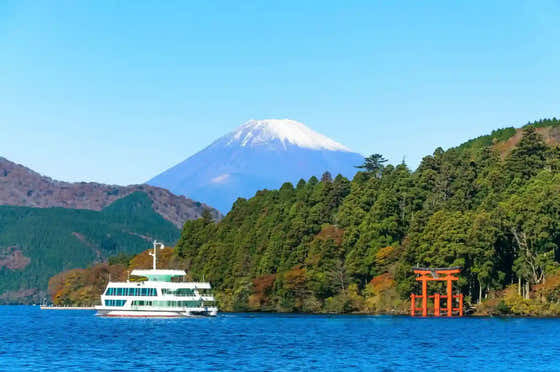
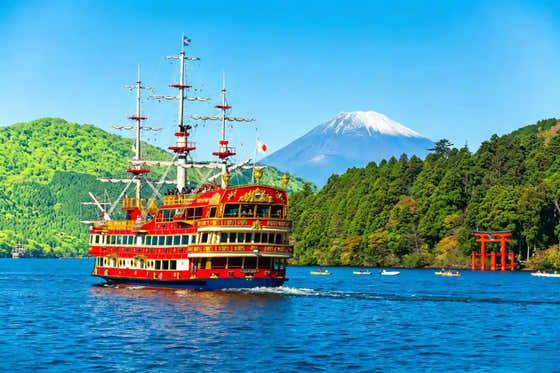
Lake Ashi is one of the most scenic places to combine autumn foliage with classic Hakone sights. Around Moto-Hakone, you can see autumn-colored trees along the lakeshore, with the red Heiwa no Torii standing in the water below Hakone Shrine.
The Hakone Sightseeing Cruise is another way to experience the area, offering views across the lake as you travel between the main ports. Arriving earlier in the morning can help you avoid the busiest periods, particularly on weekends during the autumn foliage season.
2. Hakone Ropeway

The Hakone Ropeway connects the Lake Ashi area with Owakudani, crossing the volcanic landscape above Hakone. During the autumn season, the higher sections of the route offer views of the mountain slopes covered in changing foliage.
The ride is also one of the easiest ways to see the difference in elevation across Hakone without a long hike.
3. Owakudani Volcanic Valley

Owakudani is the highest and most distinctive stop on this route, sitting at around 1,000 meters above sea level. Along with autumn-colored mountain slopes, you can see volcanic steam rising from the valley and, on clear days, Mt. Fuji in the distance.
The Owakudani visitor area is also known for kuro-tamago, eggs cooked in the area's sulfurous hot springs, which develop their characteristic black shells.

For more information about visibility and weather conditions, see our Can You See Mt Fuji from Hakone?.
1-Day Hakone Autumn Itinerary
For a full-day trip from Tokyo, an early start is recommended. Leaving around 7:30 AM gives you more time to explore Hakone before the afternoon and leaves some flexibility for traffic, queues, and changing weather conditions.
-
Depart Tokyo in the morning: Travel to Hakone by car, private tour vehicle, or train.
-
Hakone Shrine & Lake Ashi: Start around Moto-Hakone and visit Hakone Shrine and the lakeshore. Walk down to the famous Heiwa no Torii and take in the views across Lake Ashi. Arriving earlier usually means fewer people around the lakeshore.
-
Lake Ashi Sightseeing Cruise: Take the Hakone Sightseeing Cruise from Moto-Hakone toward Togendai. The cruise gives you a different view of the surrounding autumn-colored slopes and is an easy way to connect the Lake Ashi area with the Hakone Ropeway.
-
Hakone Ropeway to Owakudani: From Togendai, take the Hakone Ropeway toward Owakudani. Along the way, you can see the changing mountain slopes from above. At Owakudani, explore the designated visitor areas and see volcanic steam rising from the valley.
-
Lunch at Owakudani: Take a lunch break around Owakudani before continuing your journey. The area is also known for its famous kuro-tamago, or black eggs.
-
Return to Tokyo or Continue Exploring: Depending on your departure time and transport, return toward Tokyo or add another nearby Hakone stop. For more ideas, see our Things to Do in Hakone guide.
Choosing the Right Tour Option
The best tour depends on how much you want to see in one day and how much flexibility you need.
-
Want to combine Hakone and Mt. Fuji? If you want to cover Lake Ashi, the Hakone Ropeway, Owakudani, and several Mt. Fuji viewpoints in one day, the Hakone & Mt Fuji Day Tour is the most comprehensive option.
-
Want more privacy and flexibility? A Hakone Private Tour with Hotel Pickup is a better fit for families or travelers who prefer a private vehicle, hotel pickup, and more control over the pace of the day.

¥4,104.00
¥3,351.00
Hakone vs. Kawaguchiko for Autumn Leaves

Both Hakone and Lake Kawaguchiko are popular autumn destinations near Mt. Fuji, but the experience is quite different. Hakone is better suited to travelers who want to combine autumn foliage with lakeside sightseeing, the Hakone Ropeway, and Owakudani. Kawaguchiko is a stronger choice if your main priority is seeing Mt. Fuji with autumn colors in the same view.
| Feature | Hakone Autumn Circuit | Lake Kawaguchiko Autumn |
|---|---|---|
| Typical Foliage Season | Late October–early December, varying by elevation | Early–late November, depending on location and year |
| Main Autumn Experience | Lake Ashi, Hakone Shrine, Ropeway, Owakudani | Momiji Kairo, Lake Kawaguchi, Mt. Fuji views |
| Mt. Fuji Views | Possible from several viewpoints, weather permitting | One of the main reasons to visit, especially around the lake |
| Overall Experience | A varied mountain route combining several attractions | More focused on lakeside scenery and Mt. Fuji photography |
| Getting There from Tokyo | Multiple options, including Romancecar, trains, and highway buses | Mainly highway buses or train connections via Otsuki |
| Autumn Traffic | Roads can become busy around Hakone's main sightseeing areas | Chuo Expressway traffic can be heavy on busy autumn weekends |
If you are deciding between the two, our detailed guide Hakone vs Kawaguchiko compares the destinations in more detail.
If you decide to focus on the Fuji Five Lakes area instead, see our Mount Fuji guides.
Best Mt Fuji Day Trip from Tokyo
10 Best Things to Do in Lake Kawaguchi
Oshino Hakkai: Best Things to Do & Mt. Fuji Tips
12 Best Things to Do in Mt Fuji

- Hakone Fall Foliage FAQs
What is the best month to visit Hakone for autumn leaves in 2026?
November is generally the best month to visit Hakone for autumn foliage. Higher areas such as Owakudani and the upper Hakone Ropeway can start showing color from late October, while Lake Ashi, Gora, and lower areas tend to reach their best color later in November. The exact timing varies by year and elevation.
Can you see Mt. Fuji from Hakone during autumn?
Yes, on clear days. November can offer good visibility, but Mt. Fuji views depend on cloud cover and weather conditions. Potential viewpoints include Owakudani, the Hakone Ropeway, Lake Ashi, and Moto-Hakone. For more detail, see our When is Mt. Fuji Visible? guide.
Is Hakone doable as a day trip from Tokyo?
Yes. Hakone is one of the easier destinations to visit from Tokyo in a day, especially if you focus on a few connected sights rather than trying to see the entire area. A typical day can combine Lake Ashi, the Hakone Ropeway, and Owakudani before returning to Tokyo in the evening.
What should I wear when visiting Hakone in November?
Dress in layers and bring a warm outer layer. Hakone can feel considerably colder than Tokyo, particularly at higher elevations such as Owakudani. A fleece or light down jacket, comfortable walking shoes, and an extra layer for windy areas are useful. If you plan to visit early in the morning or stay until after sunset, bring an additional warm layer.